

Written by Angela Iobst
As organizations navigate a world defined by rapid technological change and shifting global dynamics, the expectations placed upon leadership continue to evolve. Looking ahead to 2026, the landscape of strategy execution is poised for dramatic transformation. Today’s executives must not only adapt to emerging trends but anticipate their impact and act decisively.
In this leadership forecast, we explore the key strategy trends set to redefine the way organizations plan, align, and execute initiatives in the years ahead.
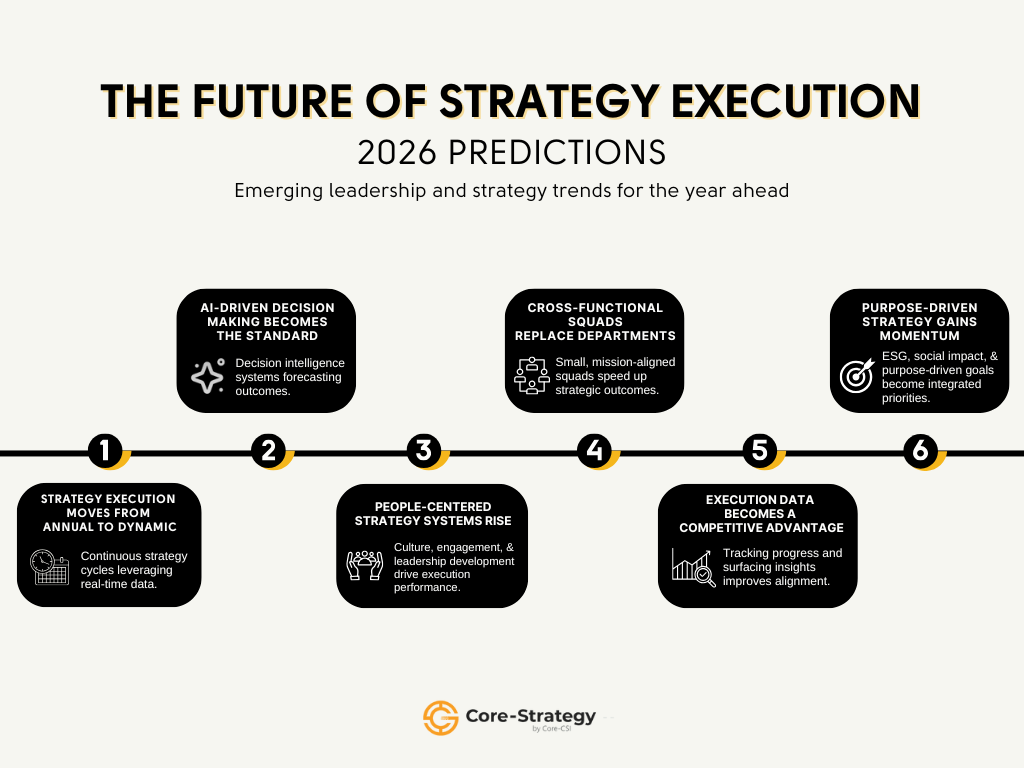
1. Strategy Execution Moves From Annual to Dynamic
The static, calendar-based approach to strategic planning is becoming obsolete. By 2026, leading organizations will adopt continuous strategy cycles, leveraging real-time data to update priorities, allocate resources, and redeploy teams in near-real time.
What this means for leaders:
-
More frequent strategic alignment meetings
-
KPIs that evolve with changing conditions
-
Cross-functional agility as a core competency
2. AI-Driven Decision Making Becomes the Standard
Artificial intelligence will shift from support tool to strategic partner. Decision intelligence systems will forecast outcomes, simulate scenarios, and guide leaders toward better strategic choices.
Expect AI to:
-
Identify execution risks before they materialize
-
Suggest optimal resource allocation
-
Automate routine strategic analyses
Far from replacing leadership, AI will enhance it—allowing executives to focus on creativity, communication, and culture.
3. Strategy Execution Shifts Toward People-Centered Systems
While technology accelerates execution, people remain the engine of strategy. In 2026, culture and human-centric design will be embedded into strategic frameworks.
Key shifts include:
-
Psychological safety becoming a measurable operational metric
-
Employee engagement analytics influencing strategic priorities
-
Leadership development programs tailored to execution excellence
4. Cross-Functional Squads Replace Traditional Departments
Inspired by agile methodologies, organizations will increasingly structure work around squads—small, multidisciplinary teams aligned to strategic outcomes rather than departmental boundaries.
Benefits:
-
Faster execution
-
Higher accountability
-
Stronger alignment to value creation
Leadership will move from managing departments to orchestrating strategic ecosystems.
5. Execution Data Becomes the Next Competitive Advantage
The rise of execution-management platforms will make it easier to track progress, visualize dependencies, and surface insights across the organization. By 2026, leaders will expect full transparency into execution pipelines.
This shift will:
-
Reduce blind spots
-
Improve forecasting accuracy
-
Strengthen organizational alignment
6. Purpose-Driven Strategy Gains Momentum
More leaders will integrate ESG, social impact, and purpose-driven goals directly into their strategy execution models. Stakeholders increasingly expect organizations to balance profit with responsibility.
Purpose will no longer sit beside strategy—it becomes strategy.
Conclusion
The next era of strategy execution is fast, data-driven, and deeply human. Leaders who embrace these 2026 predictions will be better positioned to unlock competitive advantage, inspire teams, and drive lasting organizational change.
To explore our leadership insights further, visit our website or explore the full collection on our Blog Page.
